

This is a significant and growing problem. In the first half of 2025, the Financial Conduct Authority (FCA) received 4,465 reports of fake FCA scams, with 480 victims duped into sending money to fraudsters. Almost two-thirds of reports came from people aged 56 or above.
Here are the main scams currently in circulation
Crypto wallet recovery
Fraudsters claim the FCA has recovered funds from a crypto wallet opened illegally in the individual’s name. Victims receive an email saying the FCA has recovered their lost funds in the form of cryptocurrency. If they respond, the impersonators instruct them on how to set up a cryptocurrency wallet in which to deposit money claiming this will release their funds. The scammers then take those deposited funds.
Loan recovery
Targets loan scam victims, who are often very vulnerable, claiming the FCA can help them recover lost money, then persuading them to hand over further funds.
County Court Judgment (CCJ)
This involves scammers emailing consumers to say their creditors have obtained a County Court Judgment against them, and they must pay money to the FCA.
Pig butchering
A distasteful trend where scammers ‘fatten up’ their victims by building a connection – often a romantic one – and then carry out a long-term investment scam. After the victim has lost money, scammers attempt to defraud them a second time by pretending to be the FCA assisting in the recovery of their money.
Move your money
Here fraudsters claim they’re investigating the victim’s bank or other financial institution and that they need to move their money to another account for security reasons.
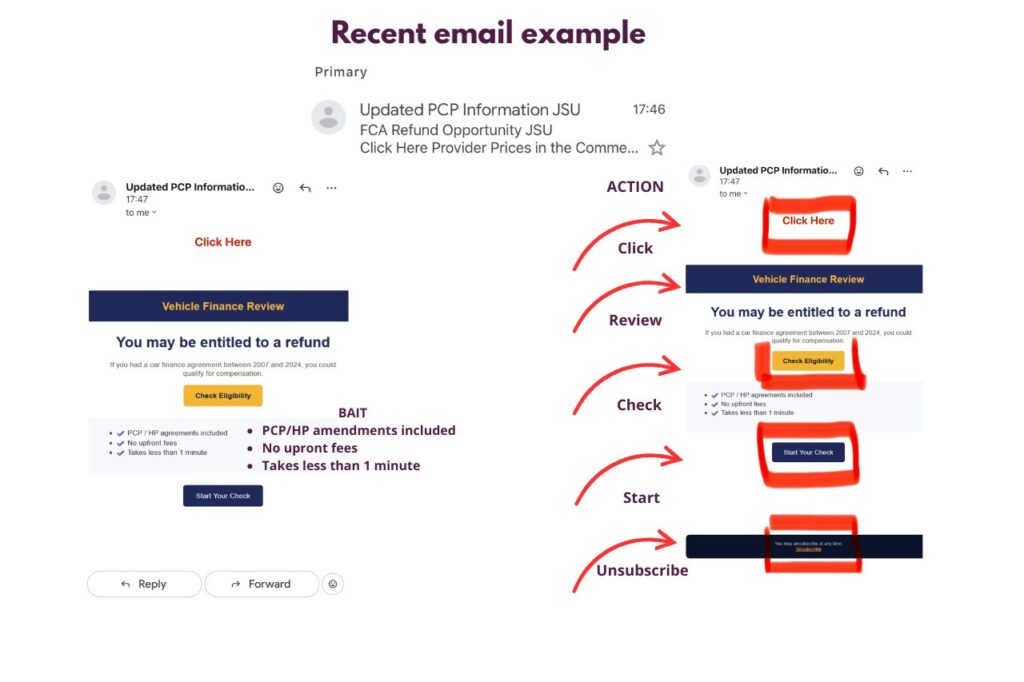
Cloned websites and fake communications
Fraudsters copy the FCA’s websites and change information – including altering warnings pages to make it look like they’ve authorised a scam firm. They may also use the name of an FCA employee, the official logo, or other images from the real website to make communications appear genuine.
Number spoofing
Scammers can make the FCA’s actual switchboard numbers – 020 7066 1000, 0300 500 8082 and 0800 111 6768 – appear in your caller ID. Be aware the FCA does not use WhatsApp or other messaging services and does not use automated calling systems.
How to protect yourself
You should only deal with financial firms that are authorised by the FCA, as it gives us greater protection if things go wrong. On the Financial Services Register, there’s an easy to use guide on how to ensure a firm is authorised and has permission for the service it’s offering. Also:
- The real FCA will never ask you to transfer money or share banking PINs and passwords
- Always verify by calling the FCA directly on 0800 111 6768 (freephone)
- Genuine FCA emails only come from addresses ending in @fca.org.uk
- Report scams to Action Fraud on 0300 123 2040
Further reading
Are you being pension scammed published on the SJP website.
Source
FCA Press Release updated 5/12/2025
FCA ‘Fake communications’ updated 19/01/2026
SJP Approved 23/04/2026