

I recently met with someone who’d been referred to me by one of my clients. One of the questions he asked was could I explain the difference between lifestyle financial planning and lifestyling, in relation to his pension and the following sets out the main differences between the two.
What’s lifestyling, how does it work and what’s its purpose?
Essentially, lifestyling is a way of gradually shifting investments from higher-risk to lower-risk assets as you approach retirement. It’s done to protect the value of accumulated pension savings from sudden market drops right before you start drawing them.
In your early years, your pension portfolio is equity-heavy to seek growth. As you get closer to your retirement date, more money is transferred into safer assets. For example, a pension fund automatically moving you from 80% equities at age 45, to 20% equities at age 65.
While lifestyling is good at protecting capital in the short term, it can be too conservative if your retirement plans are flexible, long-term, or if you have other income streams. It’s best when combined with a more holistic review of your actual needs. Lifestyling can also cause problems when de-risking during times of market volatility. As funds are moved to lower risk assets, the equities may have fallen in value and won’t then have the opportunity to benefit from the recovery.
The following testimonial came from Mark, one of my clients aged 53 at the time. He needed advice and guidance as to what options were available to him, along with help estimating when he could afford to retire.
The value of an investment with St. James’s Place will be directly linked to the performance of the funds selected and may fall as well as rise. You may get back less than you invested.
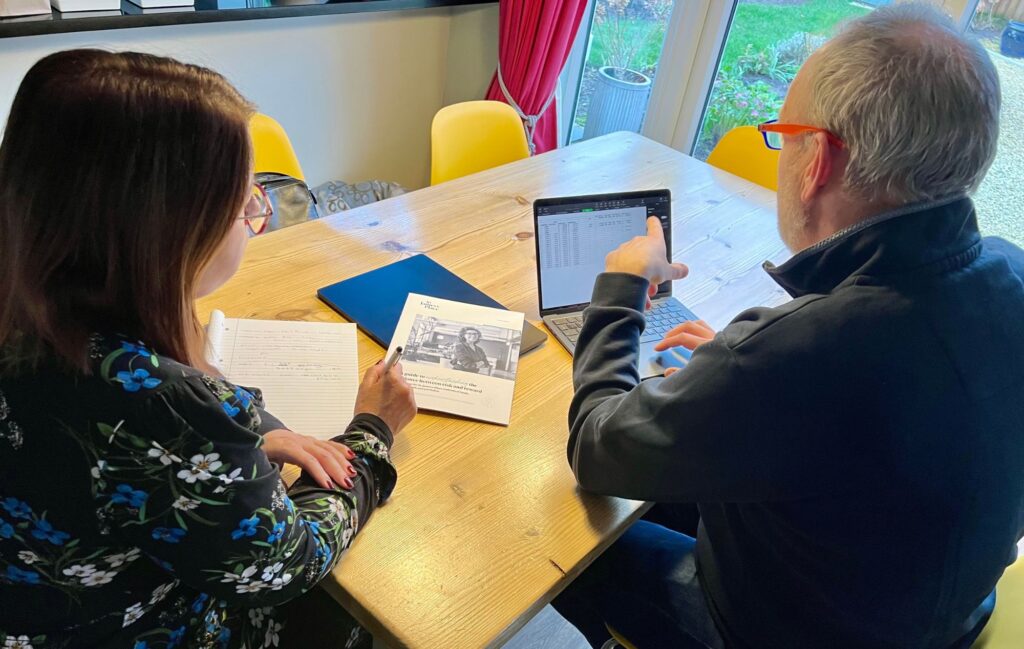
“After discussing my options in detail with Gemma, I realised that my current company pension, like most generic employer-provided DC [defined contribution] schemes, assume you will use your fund to buy an annuity and progressively de-risk your investments as you approach retirement. This is not necessarily appropriate if you have a mixture of pension pots or intend to use your investments on a draw-down basis, in which case a significant proportion of your pension remains invested for 20 years or more.”
What’s lifestyle financial planning, how does it work and what’s its purpose?
Lifestyle financial planning is a client-focused, personal finance approach. The holistic planning process starts with your predicted lifespan and works backwards to design a financial plan to support it. It enables you to align any money decisions with personal values, goals, and the lifestyle you want, rather than purely focusing on investment returns.
Here at Darcy Financial Planning, we identify your life goals. Whether you’re looking to fund your children’s education, take early retirement, or work part time at 50 to explore the world, together we can create a financial plan to support your goals through cashflow planning, investments, risk protection, etc. We then regularly review the plan along the way, adapting it to accommodate any life changes.

Summary of the key differences
| Aspect | Lifestyling in Finance | Lifestyle Financial Planning |
Scope | Narrow (investment strategy) | Broad (full financial life) |
| Focus | Managing investment risk near retirement | Achieving personal life goals |
| Timeframe | Typically, the last 5–10 years before retirement | Entire life, ongoing |
| Who drives it? | Often automated by pension providers | Driven by client’s values & choices |
Alongside our more traditional financial advice, lifestyle financial planning accounts for around thirty-five per cent of our client base. If you’d like to explore more about this service, do get in touch and I will be delighted help.
You can read Mark’s story here.
SJP Approved 19/08/2025